
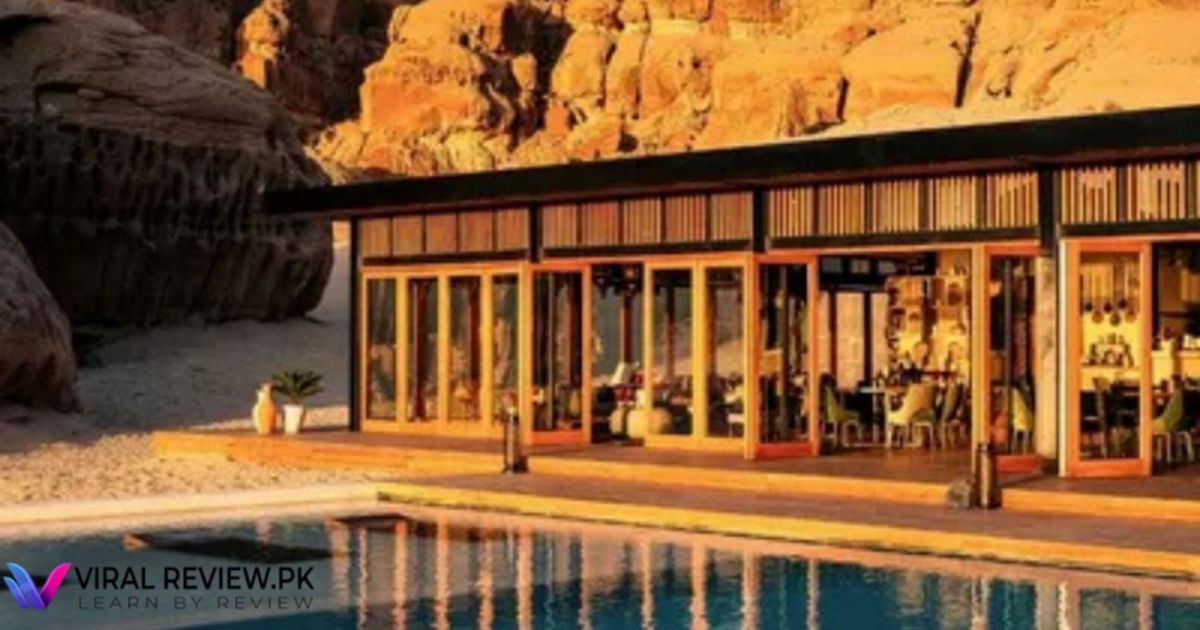
AlUla has quickly become one of the most talked-about destinations in the Middle East, and this AlUla Travel Guide is built to help you plan every part of the journey. Tucked away in northwest Saudi Arabia, this ancient region spans more than 22,000 square kilometers of sandstone canyons, oasis palm groves, and archaeological sites that stretch back thousands of years. Whether you are drawn by the towering tombs of Hegra, the surreal silhouette of Elephant Rock, or the mirrored walls of Maraya, this AlUla Travel Guide covers everything you need to know before you go.
What makes this AlUla Travel Guide different from a simple checklist is the level of detail behind it. AlUla is not just a single attraction you tick off in an afternoon; it is a living landscape where Nabataean history, Bedouin culture, and cutting-edge architecture sit side by side in the desert. Travelers who arrive prepared, with the right sequence of sites, the right time of day for each stop, and realistic expectations about heat and distances, come away with a far richer experience than those who wing it. That is exactly the gap this AlUla Travel Guide aims to fill.
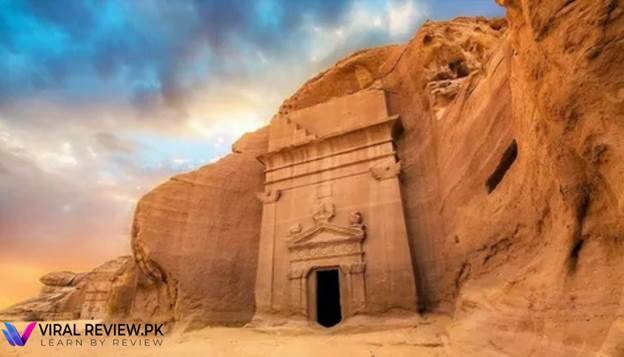
Picture standing at the base of a sandstone tomb carved over two thousand years ago, its facade glowing amber in the last light of the day, while a few kilometers away a mirrored building disappears entirely into the horizon it reflects. That contrast between deep antiquity and futuristic design is the heartbeat of AlUla, and it is why so many travelers now rank it alongside Petra as one of the great desert wonders of the world. This AlUla Travel Guide is your starting point for turning that image into an actual itinerary.
Quick Facts About AlUla
| Quick Facts | Details |
|---|---|
| Location | Al Madinah Province, Northwestern Saudi Arabia |
| Nearest Airport | Prince Abdul Majeed bin Abdulaziz International Airport (ULH) |
| UNESCO Site | Hegra (Madain Salih) – Saudi Arabia’s First UNESCO World Heritage Site |
| Best Time to Visit | October to April |
| Recommended Stay | 2–3 Days |
| Famous For | Hegra, Elephant Rock, Maraya, Ancient Tombs & Desert Landscapes |
| Top Attractions | Hegra, Elephant Rock, Maraya, AlUla Old Town, Harrat Viewpoint |
| Currency | Saudi Riyal (SAR) |
| Language | Arabic (English is widely spoken in hotels and tourist areas) |
| Time Zone | Arabia Standard Time (AST, UTC+3) |
| Average Winter Temperature | 15–28°C (59–82°F) |
| Best For | History Lovers, Luxury Travelers, Photographers, Adventure Seekers & Cultural Tourism |

Hegra: AlUla’s UNESCO World Heritage Treasure
Any serious AlUla Travel Guide has to begin with Hegra, the reason many travelers first hear about AlUla and the crown jewel of any visit. Built by the Nabataeans, the same civilization behind Petra in neighboring Jordan, Hegra became Saudi Arabia’s first UNESCO World Heritage Site and holds more than one hundred monumental tombs cut directly into golden sandstone outcrops. The most famous of these, the Tomb of Lihyan Son of Kuza, towers over the surrounding desert and is often described as the site’s centerpiece thanks to its scale and the intricacy of its carved facade.
Elephant Rock: AlUla’s Natural Icon
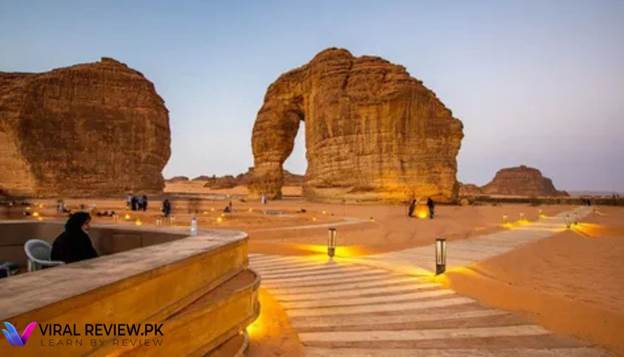
This part of the AlUla Travel Guide shifts from the ancient to the wild: if Hegra represents AlUla’s ancient past, Elephant Rock represents its untouched present. This massive sandstone formation has been sculpted by millions of years of wind and sand erosion into an unmistakable shape resembling an elephant, complete with a trunk that appears to touch the ground.
The best time to experience Elephant Rock is in the evening, when the site opens for its nightly transformation into a lively social space filled with music, fire pits, and food trucks serving casual bites like burgers and shakes. A wooden walkway leads visitors from the car park directly to the base of the formation, and because the site stays open until midnight, it works equally well as an early evening stop before dinner or a late-night outing after a long day of sightseeing elsewhere. Many travelers find that combining Elephant Rock with a visit to nearby Old Town creates a perfect half-day loop of nature and heritage.
Maraya: The Mirrored Marvel of AlUla
No modern AlUla travel guide is complete without Maraya, the record-holding mirrored concert hall that has become the destination’s architectural signature. Located within the dramatic Ashar Valley, its entire exterior is clad in mirrored panels that reflect the surrounding sandstone mountains so precisely that the building seems to vanish into the landscape depending on the angle and time of day.
Guided tours of Maraya typically run around 50 minutes and are available year-round, giving visitors a chance to learn about the building’s design process, its world-record status, and the roster of international concerts and events it has hosted since opening. Maraya sits within Ashar Valley near several luxury resorts, and access is usually tied to scheduled tours, event tickets, or reservations in the area. Entry rules can change, so it is worth checking current requirements before your visit. Even a brief exterior visit is worthwhile, since the building changes character dramatically with the shifting desert light, appearing almost invisible at midday and glowing warmly at sunset.
AlUla Old Town: A Journey Back in Time
AlUla Old Town is the fourth essential stop on this list of famous places, and for many visitors it is the one that makes the region’s history feel personal rather than abstract. Built from mudbrick and stacked over centuries, the settlement once housed the town’s entire population within its walls, with narrow alleys designed to trap shade and keep temperatures bearable through the desert heat.
Walking through AlUla Old Town today feels less like visiting a museum and more like stepping into a still-active memory of daily life. Restored shopfronts now host local artisans, coffee vendors, and small galleries, while guides share stories passed down from families who once lived within these same walls, describing how spice traders, pilgrims, and travelers all passed through on their way along historic caravan routes. Evening visits are particularly popular, when the temperature drops and the fortress and mudbrick facades are softly lit, creating an atmospheric backdrop for a slow, unhurried stroll that pairs naturally with dinner at one of the cafes tucked into the old market lanes.
Dadan & Jabal Ikmah: AlUla’s Ancient Kingdoms
Rounding out the five most famous places in AlUla are Dadan and Jabal Ikmah, twin sites that push the region’s story back even further than Hegra. Dadan once served as the capital of the Dadanite and later Lihyanite kingdoms, and its rock-cut tombs, cut high into cliff faces rather than at ground level, are considered some of the oldest monumental tombs in the Arabian Peninsula.
Just a short drive away, Jabal Ikmah functions as something close to an open-air archive, with cliff walls covered in thousands of inscriptions left by traders, poets, and travelers writing in multiple ancient languages and scripts over more than a thousand years. Archaeologists still consider the site one of the richest sources of pre-Islamic Arabian inscriptions anywhere in the world, and walking its marked trail with a knowledgeable guide turns what could look like unremarkable rock faces into a genuine historical record. Because both sites see far fewer visitors than Hegra or Elephant Rock, they are ideal additions for travelers who want a deeper, quieter connection to AlUla’s ancient past without the crowds.
Things to Do in AlUla
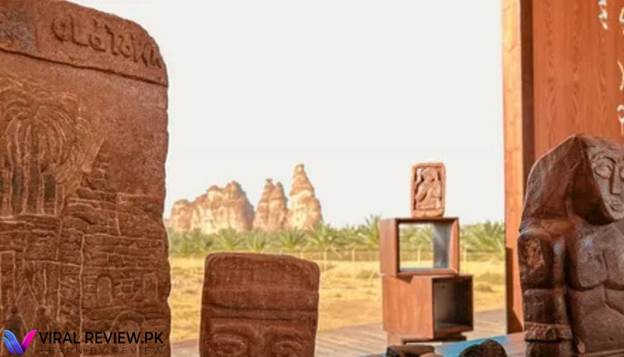
No AlUla travel guide would be complete without a full rundown of things to do beyond the headline attractions, since the destination offers far more than its most famous sites. Culture seekers should wander AlUla’s Old Town, a maze of restored mudbrick houses, narrow alleyways, and a hilltop fortress that once served as a gathering point for merchants trading spices and goods along desert caravan routes.
Adventure and stargazing round out the list of essential things to do in AlUla for travelers with a few extra days to spend. The AlJadidah Arts District has become a hub for galleries, boutique shops, and cafes showcasing contemporary Saudi creativity, while sunrise hot air balloon rides over Hegra offer a completely different perspective on the tombs below. At night, dark-sky spots like Gharameel are ideal for stargazing sessions far from any light pollution, and the region’s calendar of festivals and concerts under the AlUla Moments program adds an extra layer of entertainment for visitors who plan their trip around a live event.
AlUla Hotels and Where to Stay
Choosing the right accommodation can shape your entire trip, which is why any AlUla Travel Guide worth using should cover AlUla hotels in detail; the market now spans a genuinely wide range of styles and budgets. At the top end, resorts built directly into the surrounding canyons offer villa-style suites, private pools, and direct access to some of AlUla’s most exclusive experiences, including areas near Maraya that are only reachable with a hotel reservation
For travelers seeking a more moderate option, several AlUla hotels closer to town offer comfortable rooms, desert views, and easy access to Old Town, AlManshiyah Plaza, and the main tour departure points, all at a noticeably lower price point than the destination’s flagship luxury camps. Boutique guesthouses and mid-range properties have also grown in number as tourism infrastructure expands, giving families and solo travelers more flexibility than existed just a few years ago.
Desert Adventures in AlUla
For travelers who want more than sightseeing, this AlUla Travel Guide would be incomplete without a look at desert adventures, since AlUla has quickly developed into a genuine hub for them. Helicopter tours have also become increasingly popular for visitors short on time but eager to see the full scale of AlUla’s canyons, rock formations, and oasis in a single flight.
Closer to ground level, desert adventures continue with dune driving, camel trekking, and guided hikes through Sharaan Nature Reserve, home to reintroduced Arabian wildlife including gazelles and the endangered Nubian ibex. Booking these experiences in advance is essential, since many operate limited daily slots and are especially popular during the cooler months between October and April.
Ancient Arabia and the Story Behind AlUla
Understanding AlUla means understanding its place within the broader story of ancient Arabia. Long before it became a UNESCO-listed destination, the region served as a critical waypoint on incense and spice trade routes that linked southern Arabia to the Mediterranean and Mesopotamia. Successive civilizations, including the Dadanites, Lihyanites, and eventually the Nabataeans, left their mark on the landscape, each contributing tombs, inscriptions, and settlements that archaeologists are still working to fully document today. Discover how the ancient pathways of AlUla seamlessly connect to the spiritual heritage of nearby Madinah, offering a profound journey through Saudi Arabia’s living history.
Saudi Arabia’s Royal Commission for AlUla has invested heavily in preserving and interpreting this history, opening new museums, funding ongoing excavations, and training local guides to share these stories firsthand. For travelers with a genuine interest in the ancient world, few destinations offer as tangible a connection to it as AlUla does.
Why AlUla’s UNESCO Status Matters
Hegra’s inscription as Saudi Arabia’s first UNESCO World Heritage Site was a milestone for the Kingdom’s heritage tourism sector. Beyond Hegra itself, the broader push around UNESCO Saudi Arabia recognition has encouraged deeper protection of surrounding sites like Dadan and Jabal Ikmah, both considered strong candidates for future heritage listing.
This designation also shapes how the destination is managed day to day, with strict rules around guided access, conservation-first development, and limits on visitor numbers at the most sensitive tomb clusters. For anyone planning a trip, knowing this context adds real weight to the experience of standing among structures that are formally recognized as some of the most significant on the planet.
AlUla Tourism: Practical Planning Tips
Good AlUla tourism planning starts with timing. The destination is open year-round, but summer months from May through September bring extreme heat that makes outdoor exploration genuinely uncomfortable, so most travelers, and most AlUla tourism authorities themselves, recommend visiting between October and April when daytime temperatures are far more manageable. International visitors need a Saudi visa, though citizens of dozens of eligible countries can apply for an e-visa online in minutes, with the option valid for a full year and allowing stays of up to 90 days per visit.
The destination is considered very safe for tourists, including solo female travelers, thanks in large part to controlled, purpose-built development around the sites. Most experienced visitors recommend a minimum of three nights to properly cover Hegra, Old Town, Elephant Rock, and Maraya, with four or five nights allowing time for adventure activities like hot air ballooning and via ferrata without feeling rushed between stops.
Visa & Entry Requirements for AlUla
Nearly every international visitor needs a Saudi visa before flying in, and the good news is that the process is straightforward for most nationalities. Travelers from dozens of eligible countries can apply for an e-visa online in a matter of minutes, with the visa valid for a full year and allowing multiple stays of up to 90 days each. GCC citizens do not need a visa at all, and Saudi nationals obviously require no separate entry document. It is worth applying at least a few days before departure so any document checks or minor corrections do not create last-minute stress.
Getting to AlUla: Flights & Transport
AlUla has its own domestic airport. Once you land, most attractions are spread across a wide area, so renting a car or arranging private transport is the most practical way. Many resorts also offer shuttle services to key sites, and every guided tour includes its own transport, so travelers without a rental car can still see the major highlights without difficulty. Depending on the season, AlUla may also have direct or seasonal international flights from selected regional cities, so it’s worth checking current schedules before booking.

Currency, Money & Costs in AlUla
The Saudi riyal (SAR) is the local currency, and cards are widely accepted at hotels, restaurants, and official ticketed attractions, though it is still worth carrying some cash for smaller cafes, markets, and tips. Guided tours to Hegra typically cost under 120+ SAR, while Maraya tours and other experiences fall in a similar mid-range bracket, making the headline attractions relatively affordable compared to accommodation costs. Budgeting is really shaped by where you stay, since AlUla hotels range from modest, moderately priced rooms near town to some of the most expensive luxury resorts in Saudi Arabia, so setting a lodging budget first will do more to shape your total trip cost than anything else.
Local Customs & Dress Code in AlUla
Saudi Arabia has relaxed many of its dress requirements for tourists in recent years, but modest clothing is still appreciated and recommended at heritage sites and in public areas. Shoulders and knees covered is a safe general rule for both men and women, and swimwear should be reserved for pool and resort areas rather than worn around town. Alcohol remains illegal throughout the country, including in AlUla’s international hotels, and visitors should be mindful of photography etiquette, particularly around local residents, who may not wish to be photographed without being asked first.
Emergency Numbers in AlUla
Saudi Arabia operates a unified emergency line at 911. Direct emergency numbers are also used in some contexts: police 999, ambulance 997, civil defence/fire 998, and traffic police 993.
Planning a road trip across the Kingdom? These approximate driving distances from AlUla to other major destinations can help you estimate travel times and organize a smoother itinerary. If you’re exploring multiple regions, this information complements your Saudi Travel Guide and makes planning your journey much easier.
Distances from AlUla to Other Major Cities
- AlUla → Madinah: Approximately 330 km
- AlUla → Tabuk: Approximately 335 km
- AlUla → NEOM: Approximately 470 km
- AlUla → Jeddah: Approximately 700 km
- AlUla → Riyadh: Approximately 1,040 km
- AlUla → Makkah: Approximately 730 km
FAQs About AlUla Travel Guide
Is AlUla worth visiting?
Yes, AlUla is widely considered one of the standout destinations in the Middle East.
How many days do you need in AlUla?
Most travelers should plan for a minimum of three nights, with four or five allowing time for adventure activities without feeling rushed.
Can you visit Hegra without a guide?
No, independent access to Hegra is not permitted, and all visits must go through an official guided tour.
Is Elephant Rock free to visit?
Yes, entry and parking at Elephant Rock are free, though nearby food and drink stalls charge separately.
Is a visa required to visit AlUla?
Most international visitors need a Saudi e-visa, which is usually approved within minutes for eligible nationalities.
Is AlUla safe for solo female travelers?
Yes, AlUla is considered very safe, with a dedicated tourism police presence and well-established visitor infrastructure.
How do I get to Maraya?
Maraya is reached via a short drive through Ashar Valley, and most visitors combine it with a guided tour or hotel shuttle.
Final Thoughts – AlUla Travel Guide
AlUla rewards travelers who take the time to plan properly, and that is the entire purpose behind this AlUla Travel Guide. From the ancient carved facades of Hegra to the mirrored walls of Maraya and the wind-sculpted curves of Elephant Rock, this is a destination where every stop tells part of a much larger story about ancient Arabia and its place in the modern world. Use this AlUla Travel Guide as your foundation, adjust the pacing to match your own interests, and give yourself enough time to experience AlUla the way it deserves to be seen, unhurried, curious, and ready to be surprised by what the desert reveals next.
What stays with most travelers long after they leave is not any single monument but the feeling of scale, standing in a canyon that has watched over thousands of years of human history while modern Saudi Arabia builds something entirely new around it. AlUla is not a destination you rush through and check off a list; it is one you walk through slowly, letting the sandstone, the silence, and the stories of the people who carved their lives into these cliffs settle in.
Quote of inspiration
The desert does not hurry, and it does not forget; it simply waits for those patient enough to listen.