
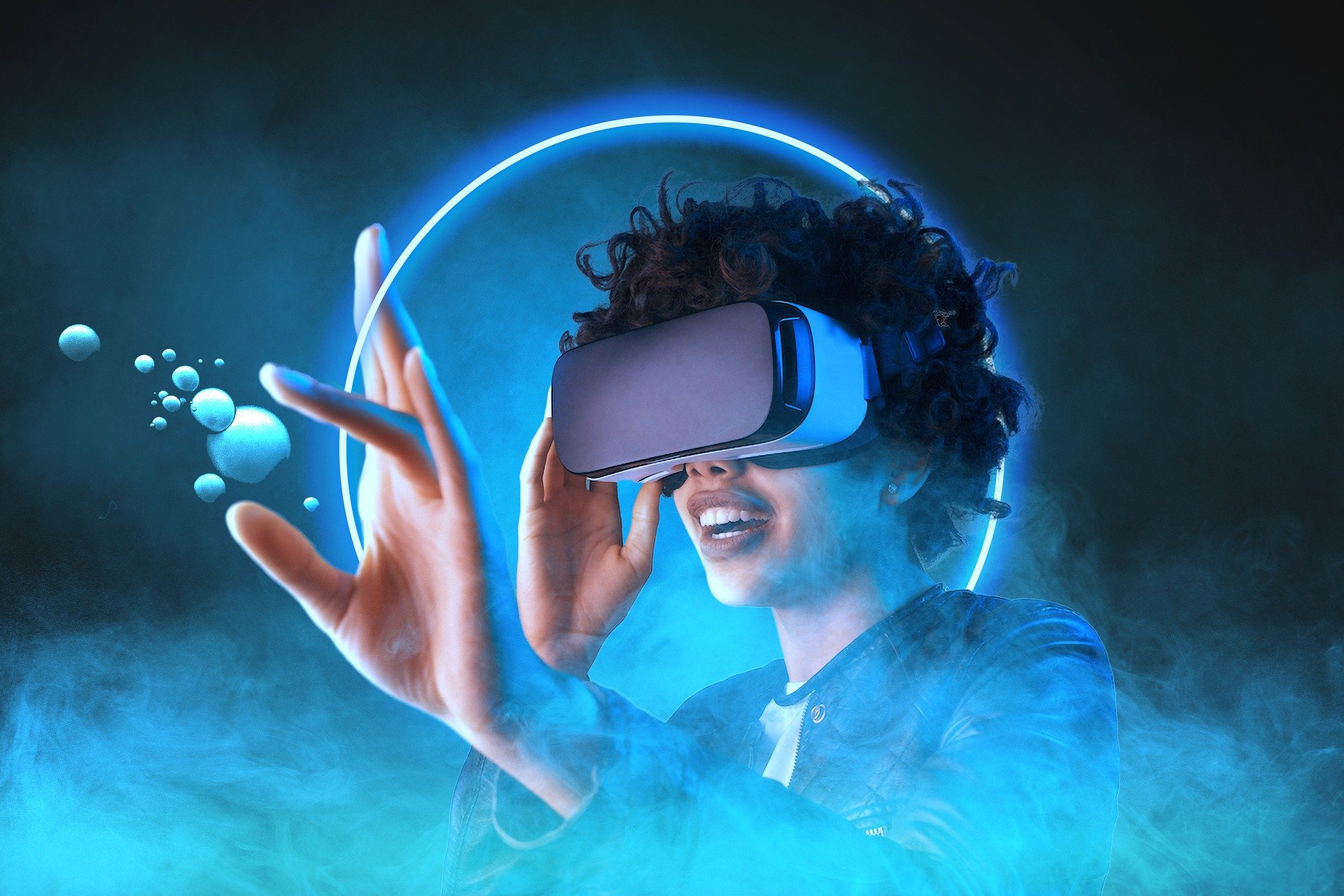
The Metaverse and haptic feedback are two powerful technologies that are rapidly changing how we interact with virtual reality. This blog post will discuss how these two technologies work and how they revolutionize how we interact with virtual reality. We will also discuss Facebook’s Metaverse and how it is ushering in a new era of virtual reality. By the end of this post, you should better understand the power of Metaverse and haptic feedback and how they are transforming how we interact with virtual reality.

Understanding The Power Of Metaverse
Virtual reality (VR) technology is one of the most exciting and rapidly growing fields in tech today. It can potentially change how we live, work, and play, and there are many applications for haptic feedback technology within VR. This section will explore the Metaverse, how it works, and some of its key benefits. We will also look at some of the challenges with existing haptic technology and discuss how Metaverse and haptic feedback can create an even more immersive experience.
What is the Metaverse?
The Metaverse is a virtual reality platform that was first developed by
Douglas Rushkoff in 1995. It’s a digital world that exists on a blockchain
network and allows users to interact with each other in various ways. You
can access the Metaverse through multiple devices, such as smartphones or
PCs, and can use it to explore different worlds or scenarios. The Metaverse
is built on several fundamental principles, such as user autonomy, privacy,
and fungibility – meaning that assets inside the Metaverse are equivalent no
matter where they are in the network.
 |
| Metaverse, Haptic Feedback, and Virtual reality |
Benefits of haptic feedback technology
Haptic feedback technology has many benefits for both individuals and
businesses alike. For individuals, it can be used for gaming or exploring
new environments without wearing special gear or headsets. Haptic feedback
also has therapeutic benefits for people who have problems with vision or
balance due to conditions such as blindness or cerebral palsy (CP).
Businesses can use haptic feedback technology to help workers feel engaged
with their tasks or interactively communicate with customers. Some popular
applications of haptic feedback technology include medical training
simulations, prosthetic devices, education systems, manufacturing processes,
and more!
Characteristics of feedback Telepresence
Several vital characteristics make feedback Telepresence unique from other
forms of Telepresence: First, Feedback Telepresence allows two people not
physically present together to interact virtually. This means you could
converse with someone halfway around the world without meeting them
face-to-face. Second, Feedback Telepresence does not require expensive
equipment or special software; you only need a smartphone. Third, Feedback
Telepresence provides immeasurable comfort because it replicates natural
human interactions using vibrations, sounds, touch, temperature sensations,
etc. This makes it ideal for video conferencing applications where
participants might.
 |
| Virtual Reality |
The Impact Of Haptic Feedback In Virtual Reality
Haptic technology is quickly becoming integral to our virtual and augmented
reality experiences. It’s no wonder – haptic feedback has several benefits
that make it an ideal addition to virtual reality. By providing realistic
and immersive sensations, haptic feedback can enhance the overall experience
of using virtual reality. In this section, we’ll look at some of the
different ways that haptic feedback can be used in virtual reality and its
implications for other industries.
First and foremost, haptic feedback is instrumental in enhancing the gaming
experience. Gaming environments become more immersive and exciting by
providing realistic vibrations or shocks to the player’s hands or feet. This
can keep players engaged in the game longer and increase their sense of
victory or accomplishment.
Haptic technology is also being explored in animatronics – robots designed
to simulate human gestures and expressions. Adding haptic feedback to these
robots can realistically emulate human movements and expressions. This has
potential applications in various industries, from entertainment to
healthcare.
Finally, many potential applications for haptic feedback have yet to be
explored – from training soldiers in military simulations to helping people
with disabilities interact with digital content safely and comfortably. The
possibilities are endless! As we move closer to a future where virtually
everything is connected, we must continue to develop innovative technologies
like haptic feedback so that everyone can enjoy their VR experiences to the
fullest extent possible.
Exploring The Role Of Haptic Technology In Metaverse Experiences
Metaverse is an exciting new virtual reality platform built on blockchain
technology. Metaverse allows users to create and manage their own virtual
worlds and integrates with various other VR and AR platforms. One feature
that makes Metaverse unique is its use of haptic feedback technology.
Haptic technology is a class of sensory feedback technologies that allow
users to feel physical sensations in their environment. This includes things
like vibration, heat, sound, and pressure. Haptic feedback systems are often
used in gaming applications to provide a more immersive experience for the
user.
Metaverse integrates haptic feedback systems into its VR and AR experiences
to provide a more realistic experience for the user. For example, if you’re
wearing an AR headset and you touch something in your environment, the
object will physically move in response. This ensures that the user feels
like they are interacting with the virtual world around them.
 |
Haptic feedback and VR in Metaverse play an important
|
One of the challenges faced when integrating haptic feedback systems into
Metaverse experiences is creating a system that is both easy to use and
intuitive for users. Additionally, it’s essential to ensure that all users
have access to haptic feedback technology regardless of their experience
level or technical ability. There are also some ethical considerations
involved when exploring haptic feedback technology for use in Metaverse
environments – for example, how do we ensure that all users have an equal
opportunity to enjoy these experiences?
There are many potential applications for haptic feedback systems within
Metaverse environments – from enhancing navigation within Virtual Reality
worlds to providing additional sensory information during Mixed Reality
experiences. It’s essential for researchers working in this area to explore
new ways to integrate haptic technologies into Metaverse experiences so that
they can provide even more immersive and realistic experiences for users
worldwide!
The Start Of A New Era: Facebook’s Metaverse
Metaverse is a new type of platform that allows users to interact with each
other in a shared, persistent online world. Metaverse technology can change
how we live, work, and learn. Below, we will explore some of the ways that
metaverse technology will impact society and our lives.

Metaverse technology has the potential to revolutionize how we interact
with each other. For example, imagine visiting a friend’s house without
leaving your home. With metaverse technology, you could completely immerse
yourself in another person’s world using haptic feedback technologies. This
would allow you to feel like you are there – no computer required!
Another excellent use for haptic feedback is in gaming. Imagine feeling as
if you are actually controlling the characters in your favorite video game.
This would give gamers an entirely new level of immersion and control over
their experiences. In addition, current medical practices could be enhanced
by using haptic feedback technologies for patient care. For example, doctors
could use haptic feedback technologies to help patients understand complex
medical procedures or surgeries without seeing them performed
firsthand.
Metaverse technology also has incredible educational opportunities for
students around the world. Imagine taking entirely online classes – without
ever leaving your home! With metaverse technology, teachers can create
virtual classrooms that students can access from anywhere. This would allow
students from all over the globe to learn together in a shared environment –
no more missed class due to travel or work commitments!
Finally, Facebook’s Metaverse is essential because it bridges the gap
between the virtual and physical worlds. By creating a shared persistent
online world – where users can interact with each other in real-time –
Facebook’s Metaverse creates an entirely new social networking experience
that was never possible before. Social media platforms play a key role in the metaverse field.
 |
Virtual Reality in Cyberspace |
Conclusion
Metaverse and haptic feedback technologies are revolutionizing how we
interact with virtual reality. By providing users with realistic and
immersive experiences, these technologies are making VR more accessible.
Additionally, metaverse technology has the potential to transform how we
live, work, and learn by allowing us to interact with each other in a shared
online world. As these technologies evolve, researchers must explore new
ways of integrating haptic feedback into metaverse experiences to create
even more immersive experiences for all users.
Hi,
I’m reaching out because we help brands connected to viralreview.pk build authority on Instagram.
We use our customized AI system, mixed with natural manual interaction to drive niche-relevant followers to your page safely.
Open to finding out more about this?
Gemma